Geopolitics and power
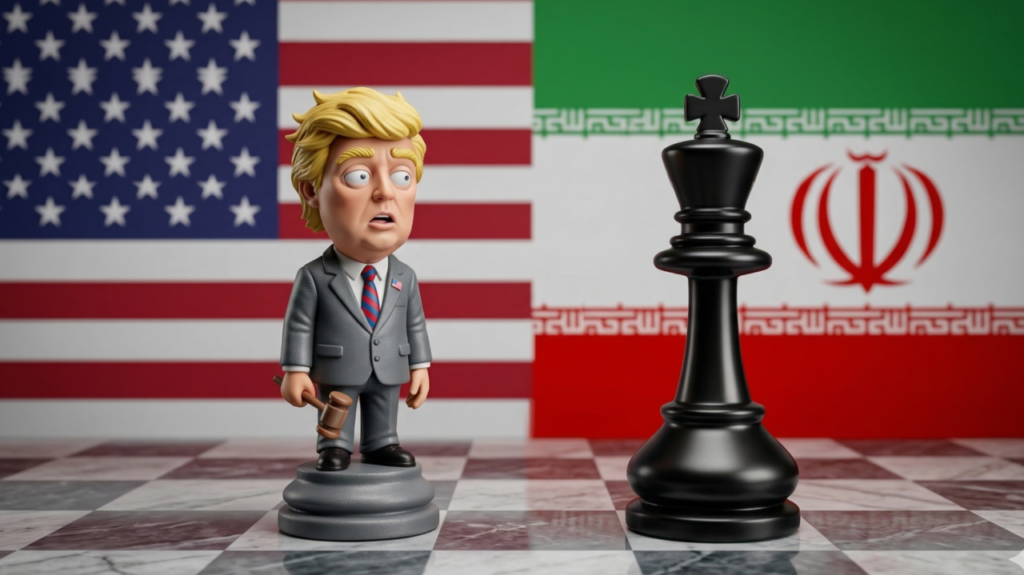
Who Is Winning the War
The daily headlines count missiles and strikes. The real question is simpler and harder: what did each side set out to achieve — and who got there?
Intelligence means very little if it does not make life more human, more capable and more awake.
I do not separate intelligence from people, or work from life. The way we design systems changes the people inside them. The way we work changes what we notice, what we value and eventually who we become.
Geopolitics and power
The daily headlines count missiles and strikes. The real question is simpler and harder: what did each side set out to achieve — and who got there?
Geopolitics and power
Why the American confrontation with Iran is not a failure of strength — it is a failure of understanding. And why history has seen this before.
Geopolitics and power
On conspiracy thinking, the refusal to accept chaos, and why the world is more often run by mediocrities than masterminds.
People and intelligence
Sam Altman is not just selling technology. He is trying to sell a new moral order, one in which the human mind slips quietly out of the human being and into the hands of corporations.
Geopolitics and power
When a drop sharpens into a blade, and thirst becomes policy.
Geopolitics and power
Not with a bang, but a drip. Calm chaos defines our era, as American dominance fades and rivals are not yet ready to fill the void.
Geopolitics and power
The great powers are not just failing to communicate; they are playing different games with different victory conditions.
Markets and illusions
You don’t need a Ph.D. in economics to feel it. There’s a strange dissonance in the air, a widening chasm between the world of tangible goods and services and the world reflected on our stock tickers.
Markets and illusions
The global economy isn’t a fair marketplace. It’s a casino. A massive, planet-sized casino with velvet ropes, glittering lights, and tables as far as the eye can see. After the second World War, one player emerged as the undisputed owner of this establishment: the United States. They built the walls, hired the dealers, and, most importantly, they printed the chips.
Markets and illusions
This is not a story about tariffs or trade deficits. It’s about a financial loop that powers the U.S. empire, and it’s starting to break. Discover how the Petrodollar System works, the lessons from the 1997 Asian Financial Crisis, and why modern tools like tariffs and sanctions are failing to stop the world from moving towards de-dollarization. This article explores the chess match of financial warfare that is shaping a new global order.
Geopolitics and power
That the “old order” is fading, and a new one is rising. That this is just a transition — a passing of the torch.
Geopolitics and power
Iran stands on the edge of a grand illusion, where Israel’s strikes are not chaotic but a calculated campaign of deception. This is no ordinary standoff; it’s a game of strategy, of subtle power plays and veiled threats. To survive, Iran must act decisively or risk becoming a pawn in another’s game.
Geopolitics and power
Explore the ongoing Middle East conflict and its impact on Israel, the U.S., and global powers. A deep dive into strategies of influence, power dynamics, and the illusion of temporary victories in a turbulent region
Ordinary life
A Strategic Field Guide to Navigating Your Doctorate
People and intelligence
Logic and its assumptions
Gaza and the world
Reality is usually more intelligent than the model we made for it.
Ordinary life
I love normal things. I also argue with myself about doing some of them.
People and intelligence
For me, intelligence is not a score, a model or a performance. It is the ability to notice, connect, question, adapt and act with judgment. Technology can extend that ability—or quietly replace it with dependency.
The tools I want to create do not make people smaller. They remove repetitive friction, expose useful context, remember what matters, challenge weak assumptions and give people more room for judgment, imagination and better decisions.
Logic and its assumptions
I like a clean argument, evidence and structure. But I do not trust a logical chain merely because every step looks tidy. Sometimes the assumption underneath it is wrong. Sometimes the system is optimizing the wrong thing. Sometimes the most useful move is to break the frame and ask a question that was not allowed by the original logic.
Be rigorous about the work. Stay ordinary about yourself.
When I was younger, I wanted to change the world. Growing older made the ambition more personal and more demanding: change myself first. I still want enough ambition to build difficult things, enough humility to change my mind, enough curiosity to break my own logic, and enough ordinary life to remember why any of it matters.
A smart tool should leave a person more capable after using it, not simply more dependent on the tool.
Reason carefully. Then inspect the assumptions that made the reasoning possible. The frame can be the mistake.
Models, plans and elegant strategies are useful. Reality is still allowed to disagree with all of them.
Good systems respect attention, dignity, context and the messy intelligence people already possess.
Difficult things can be explained clearly without pretending they are simple.
Ambition is useful. Status theatre is exhausting. I would rather make good things and still enjoy a normal day.