Geopolítica y poder
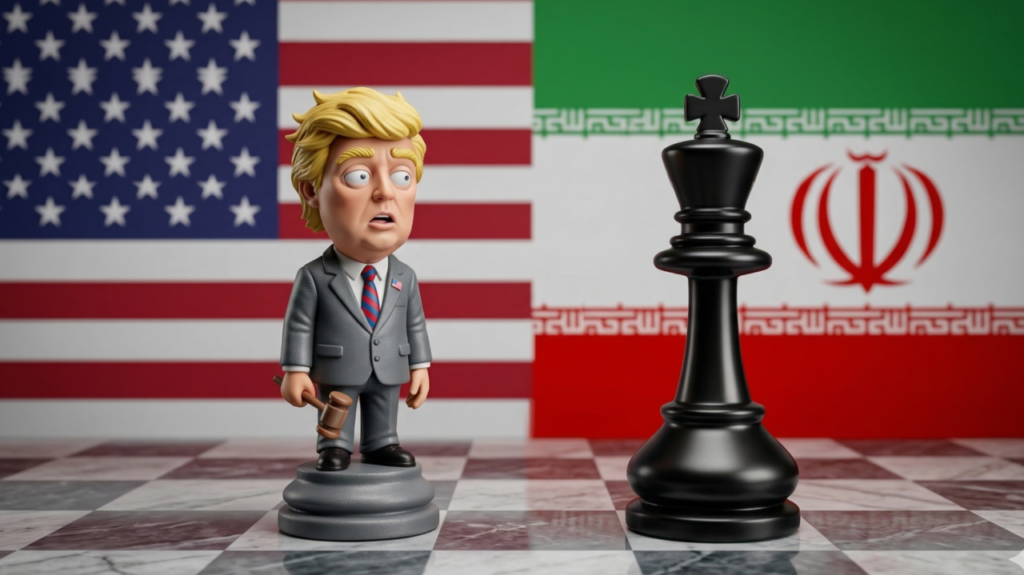
Who Is Winning the War
The daily headlines count missiles and strikes. The real question is simpler and harder: what did each side set out to achieve — and who got there?
La inteligencia significa muy poco si no hace la vida más humana, más capaz y más despierta.
No separo la inteligencia de las personas, ni el trabajo de la vida. La forma en que diseñamos sistemas cambia a las personas que viven dentro de ellos. La forma en que trabajamos cambia lo que vemos, lo que valoramos y, con el tiempo, quiénes somos.
Geopolítica y poder
The daily headlines count missiles and strikes. The real question is simpler and harder: what did each side set out to achieve — and who got there?
Geopolítica y poder
Why the American confrontation with Iran is not a failure of strength — it is a failure of understanding. And why history has seen this before.
Geopolítica y poder
On conspiracy thinking, the refusal to accept chaos, and why the world is more often run by mediocrities than masterminds.
Las personas y la inteligencia
Sam Altman is not just selling technology. He is trying to sell a new moral order, one in which the human mind slips quietly out of the human being and into the hands of corporations.
Geopolítica y poder
When a drop sharpens into a blade, and thirst becomes policy.
Geopolítica y poder
Not with a bang, but a drip. Calm chaos defines our era, as American dominance fades and rivals are not yet ready to fill the void.
Geopolítica y poder
The great powers are not just failing to communicate; they are playing different games with different victory conditions.
Mercados e ilusiones
You don’t need a Ph.D. in economics to feel it. There’s a strange dissonance in the air, a widening chasm between the world of tangible goods and services and the world reflected on our stock tickers.
Mercados e ilusiones
The global economy isn’t a fair marketplace. It’s a casino. A massive, planet-sized casino with velvet ropes, glittering lights, and tables as far as the eye can see. After the second World War, one player emerged as the undisputed owner of this establishment: the United States. They built the walls, hired the dealers, and, most importantly, they printed the chips.
Mercados e ilusiones
This is not a story about tariffs or trade deficits. It’s about a financial loop that powers the U.S. empire, and it’s starting to break. Discover how the Petrodollar System works, the lessons from the 1997 Asian Financial Crisis, and why modern tools like tariffs and sanctions are failing to stop the world from moving towards de-dollarization. This article explores the chess match of financial warfare that is shaping a new global order.
Geopolítica y poder
That the “old order” is fading, and a new one is rising. That this is just a transition — a passing of the torch.
Geopolítica y poder
Iran stands on the edge of a grand illusion, where Israel’s strikes are not chaotic but a calculated campaign of deception. This is no ordinary standoff; it’s a game of strategy, of subtle power plays and veiled threats. To survive, Iran must act decisively or risk becoming a pawn in another’s game.
Geopolítica y poder
Explore the ongoing Middle East conflict and its impact on Israel, the U.S., and global powers. A deep dive into strategies of influence, power dynamics, and the illusion of temporary victories in a turbulent region
La vida cotidiana
A Strategic Field Guide to Navigating Your Doctorate
Las personas y la inteligencia
La lógica y sus supuestos
Gaza y el mundo
La realidad suele ser más inteligente que el modelo que construimos para explicarla.
La vida cotidiana
Me gustan las cosas normales. También discuto conmigo mismo para hacer algunas de ellas.
Las personas y la inteligencia
Para mí, la inteligencia no es una puntuación, un modelo ni una actuación. Es la capacidad de observar, conectar, cuestionar, adaptarse y actuar con criterio. La tecnología puede ampliar esa capacidad o sustituirla silenciosamente por dependencia.
Las herramientas que quiero crear no hacen a las personas más pequeñas. Eliminan fricción repetitiva, muestran contexto útil, recuerdan lo importante, desafían supuestos débiles y dejan más espacio para el criterio, la imaginación y mejores decisiones.
La lógica y sus supuestos
Me gustan los argumentos limpios, la evidencia y la estructura. Pero no confío en una cadena lógica solo porque cada paso parezca ordenado. A veces el supuesto de base está equivocado. A veces el sistema optimiza lo incorrecto. Y a veces lo más útil es romper el marco y hacer una pregunta que la lógica original no permitía.
Rigor con el trabajo. Normalidad con uno mismo.
Cuando era más joven quería cambiar el mundo. Con los años la ambición se volvió más personal y más exigente: cambiarme primero a mí mismo. Aún quiero suficiente ambición para construir cosas difíciles, suficiente humildad para cambiar de opinión, suficiente curiosidad para romper mi propia lógica y suficiente vida normal para recordar por qué importa todo esto.
Una herramienta inteligente debería dejar a la persona más capaz después de usarla, no simplemente más dependiente de ella.
Razona con cuidado. Luego mira los supuestos que hicieron posible ese razonamiento. El marco puede ser el error.
Los modelos, los planes y las estrategias elegantes son útiles. La realidad sigue teniendo derecho a estar en desacuerdo.
Los buenos sistemas respetan la atención, la dignidad, el contexto y la inteligencia imperfecta que las personas ya poseen.
Las cosas difíciles se pueden explicar con claridad sin fingir que son simples.
La ambición sirve. El teatro del estatus agota. Prefiero hacer cosas buenas y seguir disfrutando de un día normal.