Human-centred intelligence
Systems that remember context, connect scattered knowledge and make AI useful without pushing human judgment out of the room.
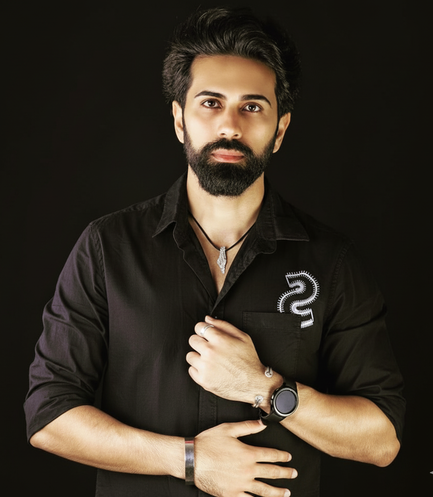
Saleh Aldasystems · strategy · humanising AI
Gaza · Alicante · systems · strategy · humanising AI
I build systems, work on strategy and try to humanise AI—so people and companies can see a clearer path through complexity. I care about intelligence that makes us more capable, not more dependent.

THIS PLACE
I have spent years moving between engineering, water, nanoscience, business, research, innovation, strategy and technology. Today the common ground is clearer to me: I build systems, shape strategy and help people and organisations turn complicated situations into a path they can actually follow. I have founded and helped build different businesses too, but I prefer to keep some of that quiet. Titles have never interested me very much.
I like ordinary things: a good conversation, a walk, the sea, food made with care, people who are curious, and the moment when a complicated problem suddenly becomes understandable. Work matters to me, but I do not want work to become a costume.
THE LENS I CARRY
Growing up with Gaza in me means I rarely see systems as abstract. Water, borders, energy, technology, institutions, power and opportunity are never only concepts. They arrive in people’s lives. That lens makes me suspicious of elegant solutions that forget reality, and attentive to the quiet intelligence people develop when they have to make life work with very little.
Reality is usually more intelligent than the model we made for it.
INTELLIGENCE & PEOPLE
For me, intelligence is not a score, a model or a performance. It is the ability to notice, connect, question, adapt and act with judgment. Technology can extend that ability—or quietly replace it with dependency.
The tools I want to create do not make people smaller. They remove repetitive friction, expose useful context, remember what matters, challenge weak assumptions and give people more room for judgment, imagination and better decisions.
THE DOMAIN I WORK IN
I work where strategy, organisational intelligence, product thinking and AI meet. Often the work begins as a mess: too much information, unclear priorities, fragmented tools or a difficult decision. I like turning that into a system people can understand and a path they can actually follow.
LOGIC / ANTI-LOGIC
I like a clean argument, evidence and structure. But I do not trust a logical chain merely because every step looks tidy. Sometimes the assumption underneath it is wrong. Sometimes the system is optimizing the wrong thing. Sometimes the most useful move is to break the frame and ask a question that was not allowed by the original logic.
WHAT I LIKE TO CREATE
Systems that remember context, connect scattered knowledge and make AI useful without pushing human judgment out of the room.
Structures that help a person or a company see what matters, what can wait, what is blocking progress and what the next credible move is.
Research, proposal, writing, decision and operating tools that reduce administrative noise and connect strategy with everyday execution.
Sometimes the most useful thing I can create is not an answer but a structure that helps someone ask a stronger question.
NOTES FOR INNOVATION
I created Notes for Innovation around a simple belief: organisations should not have to choose between human judgment and powerful technology. We build specialist systems that can work independently, share useful context and help people think, decide and operate more coherently—while people keep the authority.
EXPERIENCE, WITHOUT THE TITLE PARADE
I have worked across research, innovation, business strategy, sustainability, grant and proposal development, technology products, digital systems and venture building. A large part of what I actually do is strategy: helping people and companies find a clear path when the problem is messy, the information is scattered or there are too many possible directions. I enjoy moving between technical detail, strategic choice and the human reality around both.
EDUCATION
Systems, resources and the realities behind sustainability.
Learning to think at a radically different scale.
How organisations decide, allocate and turn ideas into action.
The foundation: structures, constraints and making things work in the physical world.
OUTSIDE THE SYSTEMS
I am not trying to become a business personality. I love reading and sport; I also regularly hate starting both. Somehow I have kept returning to them almost every day for close to twenty years. I like geopolitics because it forces history, geography, economics, power and human behaviour into the same picture. I dislike politicians and political theatre. When I was younger, I wanted to change the world. Growing older gave me a smaller and harder project: change myself first, then build things that might help other people do something better with their own lives.
Ask about my systems, strategy, humanising AI, Notes for Innovation, Gaza, geopolitics, education, writing or the ordinary things that keep me grounded.