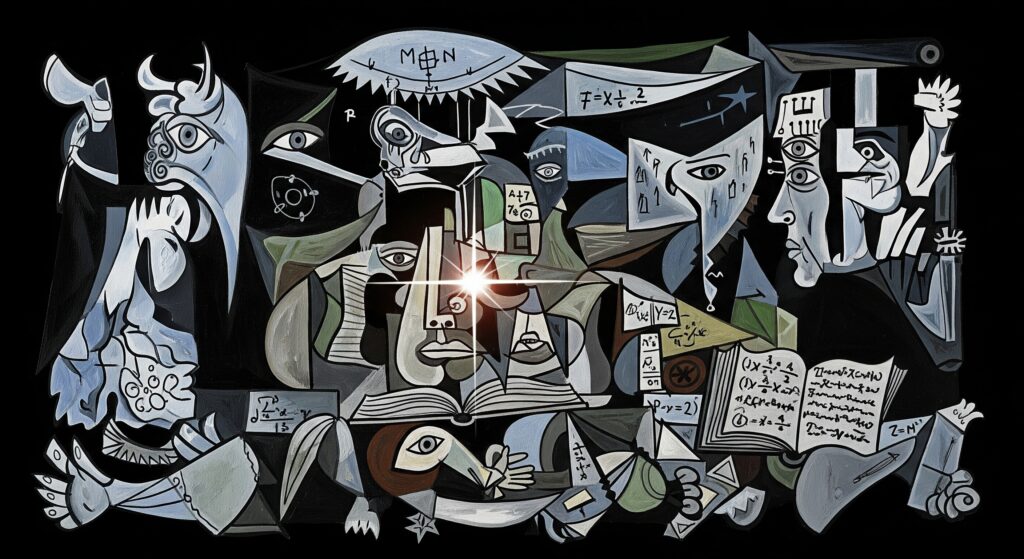
The Corruption of the Interior: Intelligence as Utility
Sam Altman is not just selling technology. He is trying to sell a new moral order, one in which the human mind slips quietly out of the human being and into the hands of corporations. That is what sits beneath his smooth language when he speaks of intelligence as a utility. The word sounds clean, modern, efficient. Yet the idea beneath it is rotten. It carries the old capitalist instinct to its logical extreme: if something is valuable, it must be captured; if it can be captured, it must be priced; if it can be priced, it must be owned by someone powerful enough to sell it back to everyone else.
What makes this especially obscene is that he speaks as though he is expanding access, while the real operation is far more sinister. He is taking something bound to human dignity, judgment, imagination, and independent thought, and pushing it into the vocabulary of infrastructure, distribution, and purchase. Once that shift happens, the entire relationship changes. Intelligence no longer appears as a living human capacity to be cultivated, sharpened, and defended. It starts to appear as an external service, something delivered to you, something you connect to, something that remains available only so long as the system allows it and your wallet can bear it.
“Intelligence no longer appears as a living human capacity… It starts to appear as an external service, something delivered to you, something you connect to.”
That is where the corruption begins. Because water and electricity, for all their importance, remain outside the human core. They support life, but they do not define the meaning of being alive. Intelligence does. Thought does. Judgment does. The ability to wrestle with reality, to understand it, resist it, reshape it, and make decisions within it, this is not a luxury layered on top of the human being. This is part of the human being. So when someone proposes that intelligence should function like a utility, he is not merely offering a business model. He is proposing a new arrangement of power in which one of the deepest human faculties is reorganized as a managed dependency.
And this is exactly the kind of violence modern capitalism prefers: clean language covering a brutal ambition. No chains, no visible coercion, no grand declarations of domination. Just a clever framework, a polished smile, and a subscription model. You no longer need to forbid people from thinking. You only need to build a world in which real cognitive power flows through systems they do not own, cannot govern, and must continuously pay to access. Control no longer arrives in the old theatrical form. It arrives as convenience.
The defenders of this logic will say that making intelligence a utility opens it to everyone. That is the usual fraud. Capitalism has always known how to wrap hierarchy in the language of inclusion. Access, however, is not equality. Availability is not freedom. A society in which everyone can touch the system is not the same as a society in which everyone stands in an equal relationship to power. Some will always have the stronger tools, the faster models, the deeper integration, the premium architecture woven into their education, work, institutions, and wealth. Others will be told they too are included because they have a limited version, a borrowed enhancement, a controlled entrance into a structure designed elsewhere. The old inequality remains. It simply learns how to speak the language of openness.
More than that, the whole vision reveals a miserable understanding of what intelligence actually is. Intelligence is not just output. It is not the production of answers, nor the acceleration of tasks, nor the automation of thought-like functions. It involves struggle, formation, hesitation, discernment, error, memory, depth, and the difficult inner labor through which a person becomes capable of seeing the world with clarity. When all this is flattened into utility, something essential is lost. The human mind is no longer treated as a place of becoming. It becomes a point of consumption.
And once society accepts that shift, the consequences spread far beyond technology. Education changes. Writing changes. Decision-making changes. The very idea of effort changes. Instead of asking how to produce deeper, freer, more capable human beings, the question becomes how to optimize their access to external cognitive systems. Instead of nurturing judgment, we rent approximation. Instead of building intellectual independence, we normalize elegant dependence. The machine is not merely helping at that point. It is slowly rearranging the standards by which human thought is valued.
That is why the issue is not whether these systems are useful. Of course they are useful. The issue lies in the philosophy smuggled through their usefulness. Sam Altman speaks as though he is describing a neutral future. In reality, he is helping construct a world in which thought itself drifts toward privatized infrastructure. The danger is not that machines become intelligent. The danger is that human beings are trained to relate to intelligence as something outside themselves, something administered above them, something they no longer develop as a matter of character and discipline, but obtain as a matter of access.
There is something deeply humiliating in that vision. A civilization that once treated reason as a foundation of freedom now approaches the possibility of treating it as a metered service. A human being could end up standing before systems owned by distant firms, asking not how to think better, but how much thinking their tier allows. That is not progress. That is degradation wrapped in technical sophistication. It is the old story of power, only now it has entered the last interior territory that still felt truly human.
Sam Altman may present himself as a builder of the future, yet the future he hints at feels spiritually impoverished. It narrows the human being while pretending to empower him. It weakens the inner life while surrounding that weakness with extraordinary tools. It does not invite humanity into greatness. It invites humanity into managed dependence, then calls that liberation.
What is needed here is not admiration for the scale of the technology, but hostility to the worldview beneath it. Because once intelligence is reorganized as a utility, the next step becomes easy to imagine: thought priced, judgment tiered, creativity optimized by subscription, autonomy eroded not through force but through seduction. The market no longer stops at labor, time, attention, or desire. It reaches inward, toward the very faculty through which the human being resists becoming a product.
That is why this idea deserves to be attacked at its root. Not because technology is evil, and not because tools should be rejected, but because there are thresholds a sane civilization should refuse to cross without naming the cost. Turning intelligence into a utility is one of those thresholds. It carries within it a chilling proposition: that the mind itself can be relocated into the marketplace and returned to the individual in measured portions.
And that, in the end, is the ugliest part of all. Not the machine. Not even the company. The ugliest part is the ambition to make human beings gradually comfortable with the outsourcing of their own inner powers, until dependence feels natural and rented cognition feels normal. Once that happens, power no longer needs to conquer the human being from outside. It will already be sitting inside his habits, his tools, his work, his language, and his daily way of facing the world.